
Hey there, how can we help?
Find the answers to your questions.
If you cannot find answer then contact us.
Undet tools | Floor Plans TAB
Click on a tool in the image to jump directly to its detailed explanation below.
Each Undet tool icon is interactive — just tap or click to navigate to the relevant section on this page.

Point Cloud TAB
 |
Scan data | Opens the settings for managing scan data. |

Scan data toolbox | Scan data section UI
 |
Add – creates a new scan position group. |
 |
Remove – remove/ungroup selected scan position group. |
 |
Entire project – groups scans of the full project (internal and external) by selecting internal scan position markers. |
 |
Inside Only – groups internal scans of the project by selecting internal scan position markers. |
 |
BB size – Allows you to resize the scan position marker size (sphere). |
Steps to group scan positions:
After selecting all scan station markers, click ENTER twice to confirm the selection. Pick a step-in scan height to group selected scan files into logical groups (external, Internal level 1, Internal level 2….) and press ENTER. After this, your scan stations will be grouped into logical groups. |
|
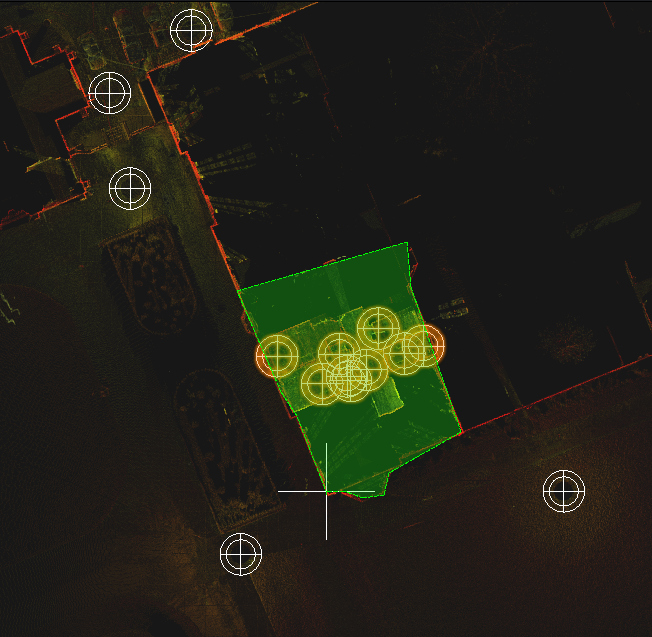
Scan data toolbox | Clipping Boxes UI

| Right-click on Active View Section Actions:
|
|
| Rename | Allows you to change the name of a view section. |
| Export | Enables exporting the point cloud data visible within the boundaries of the selected clipping box as a new Undet project. |
| Duplicate | Allows you to create a copy of the selected clipping box. |

Z Offset:
Adjusts the clipping box along the Z-axis
 |
||
| 1. Offset from 0 to center of clipping box | 2. Offset Step | 3. Up/Down to change offset value (1) by step (2) |
| Tip: You can adjust the Z offset step by holding the mouse over it and scrolling the mouse wheel. | ||
Side tools of Scan Data toolbox:
 |
Clip by Line | Creates a new clipping box defined by line and thickness:
Optional inputs: T – Thickness: Choose thickness (default – 1 meter) U – UCS: Create a new UCS based on your clipping box. V – View: Create a new view based on your clipping box. A – UCS and View: Create a new UCS and view based on your clipping box. |
 |
Clip by Rectangle | Creates a new clipping box defined by a rectangle. |
 |
Auto View Sections | Automaically generates horizontal section views at floor, cut amd ceiling heights for each building level based on point cloud input. |
|
||
1. Launch the Auto Levels View FunctionAfter launching the function:
|
||
2. Define the Section Area with Clip by Line
|
||
3. Select Floor and Ceiling LevelsThe function works with two clicks (enable Point Cloud Snapping):
|
||
4. Repeat for Other Levels
|
||
5. Automatic Creation of Section ViewsThe function will automatically generate three section views for every defined level: 🟩 View 1: Floor
🟨 View 2: Cut
🟦 View 3: Ceiling
|
||
 |
Clip inside / outside | Defines polygon selection to clip the points inside or outside the selected area. |
 |
Deactivate | Deactives point cloud clipping. |
 |
Colouring by | Changes point cloud colouring mode. |
 |
Colouring Settings | Opens additional point cloud colouring settings. |
 |
Density Settings | Opens Point Cloud density settings manager. |
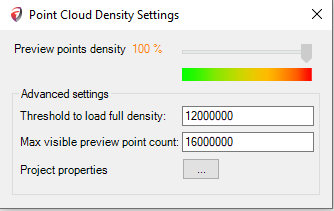 |
Point Cloud Density Settings:
Threshold for Loading Full Density: The range is typically 12-48 million points. For powerful computers, you can increase this range to 48-72+ million points. Maximum Visible Preview Point Count: A minimum of 16 million points is recommended, with an optimal range of 16-36+ million points. Project Point Resolution Information: In the properties section, you can check the loaded project’s preview and full-resolution points count. |
|
 |
Hide/Show | Hides or shows the point cloud. |
 |
Clipping Box Visibility | Toggles the visibility of the clipping box boundary on or off. |
 |
Grips | Adjusts the orientation of clipping box grips. |
 |
Delete | Removes the selected view section or clipping box. |
Bottom tools of Scan Data toolbox | Smart Indicator and point cloud snapping modes
 |
MMS Scan positions | Show position markers of panoramic images. |
 |
Clip in Clip | Enables the creation of a new clipping box within an existing clipping box. |
 |
Snap to Point Cloud | Enables/Disables snapping to point cloud points. |
 |
Snapping Options: | N – Snaps to Nearest point
H – Snaps to the Highest point Z value L – Snaps to the Lowest point Z value |
 |
Search radius for finding the highest or lowest point. | |
 |
Smart Indicator | Helps you understand which source you are using: |
 |
You see only preview points according to your settings for “Max visible preview point count.” | |
 |
If fewer points are inside your clipping box (view section) than the “Threshold to load full density” value, you will see this colour. | |
 |
You will see the yellow colour only when you have an active point cloud clipping and the “Max visible preview point count” value is equal to or higher than the “Preview point count” value of the entire project. | |
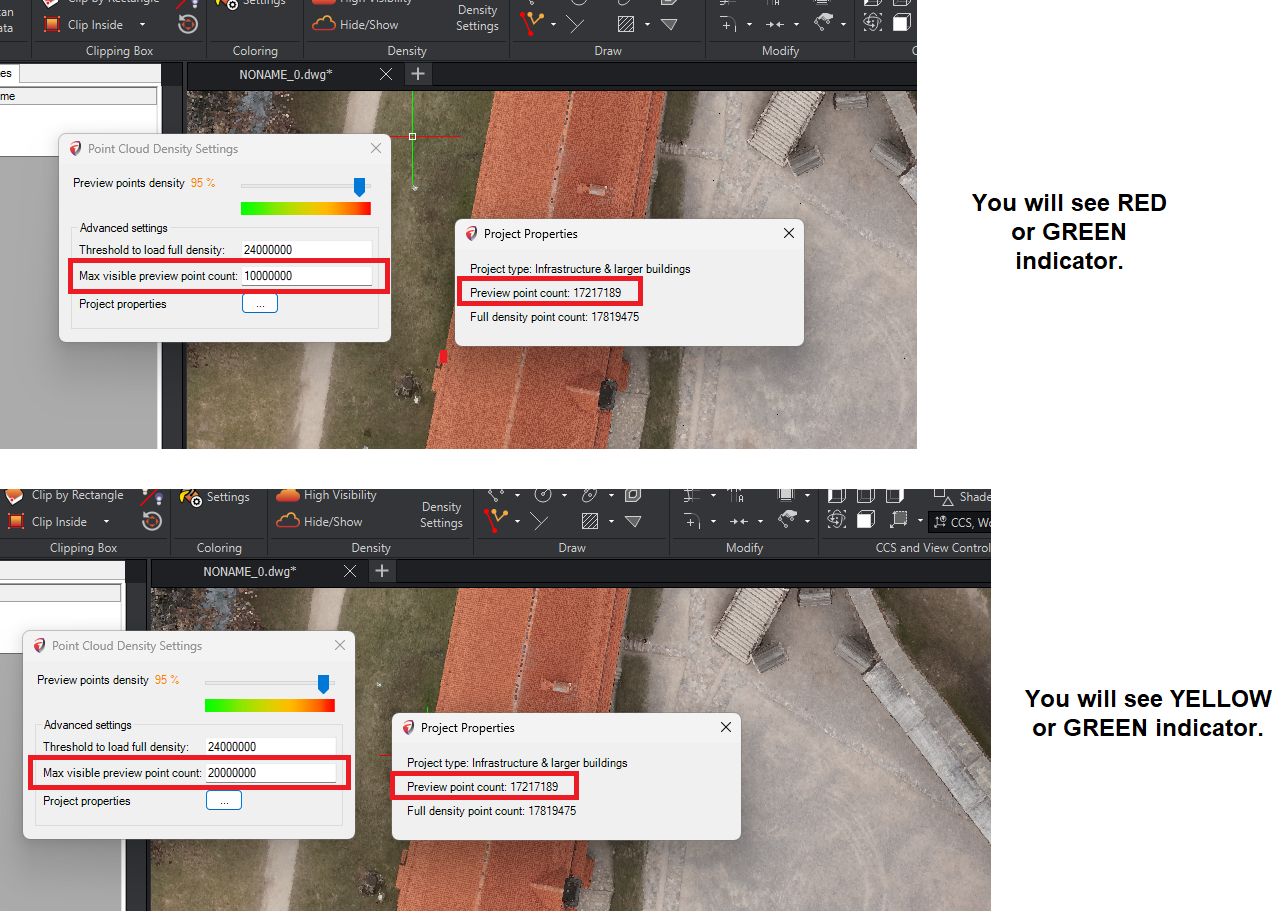 |
||
Scan data toolbox | Logic Classes UI
UNDET Logic Classes Tab you can create, edit and assign Logic Classes into different groups, classify View Sections or parts of View Sections by Logic Classes.
Usually if Your project is created from terrestrial laser scanner data it will not have any logical classes created. But if Your project will be created with mobile or LiDAR scanners it might have Logical Classes classified. Undet will recognize them and You will be able to manage them directly from Logical Classes tab.

 |
[Add Class] – Creates new empty Logic Class |
 |
[Remove] – Removes selected Group from the List. Program removes only Group, but not Data Files, assigned to it. After deleting Group, Data Files remain in the List. |
 |
[Classify] – Moves active View Section points to defined Logic Class. You can create new Logic Class or choose existing one from the launched dialog list. |
 |
[Merge] – Merges selected Logic Classes to the first Class of selected items. Select several Logic Classes with Shift button and merge them into one Logic Class. |
Right-click menu

| Add Group | Creates a new group or merges selected Logical Classes to new group. Quick tip: You can select multiple files at once by holding Ctrl or Shift button. |
| Rename | Rename any Logic Class in the List |
| Remove | Removes selected Group from the List. Program removes only Group, but not Data Files, assigned to it. After deleting Group, Data Files remain in the List. |
| New Class | Creates new empty Logic Class |
| Merge Selected Classes | Merges selected Logic Classes to the first Class of selected items. Select several Logic Classes with Shift button and merge them into one Logic Class. |
| Move Section | Moves and changes selected record position inside the Group on the Logical Classes List. |
Logic Classes List shows and helps to manage all created Logic Classes.
- To create New Class in the List right click on any created Logic Class and choose New Class command from the context menu.
- To move Active View Section or cropped part of Active View Section to specified Logic Class right click on selected Logic Class and choose Classify command from the context menu.
- To assign created Logic Classes into Group select Classes you want to assign (use Shift or Ctrl buttons to select multiple Classes) and choose Add Group command from the context menu.
- To rename any Logic Class in the List double click on its name or right click on it, choose Rename command from the context menu and type the new name.
- To remove any Logic Class from the List right click on it and choose Remove command from the context menu.
- Check Tick-Mark in V column next to corresponding Logic Class’ name if you want this Class to be visible in the drawing.
 |
Sync Browser | Locates Undet Browser view by clicking on point cloud point (snapping to pint cloud points must be turned on). |
 |
Create Pano | Creates new 3D panorama view for Undet browser. |
| For more detailed information about the above tools, refer to the Browser TAB User Manual. | ||
| Icon | Tool Name | Description |
 |
3P Wall | Creates wall with 3 points (2 points for length and third for width). |
| The 3P Wall tool allows users to create walls using three points: two points define the length, and the third point sets the width. In the command line, users can choose between Single mode to draw individual walls or Chain mode to create a series of connected walls seamlessly. | ||
 |
Auto Line Tool | Automatically detects and extracts linear features from the point cloud slice. | ||
| The tool automatically recognizes lines from 3D point cloud scans with a single click. Subsequent clicks allow you to create a continuous polyline effortlessly. | ||||
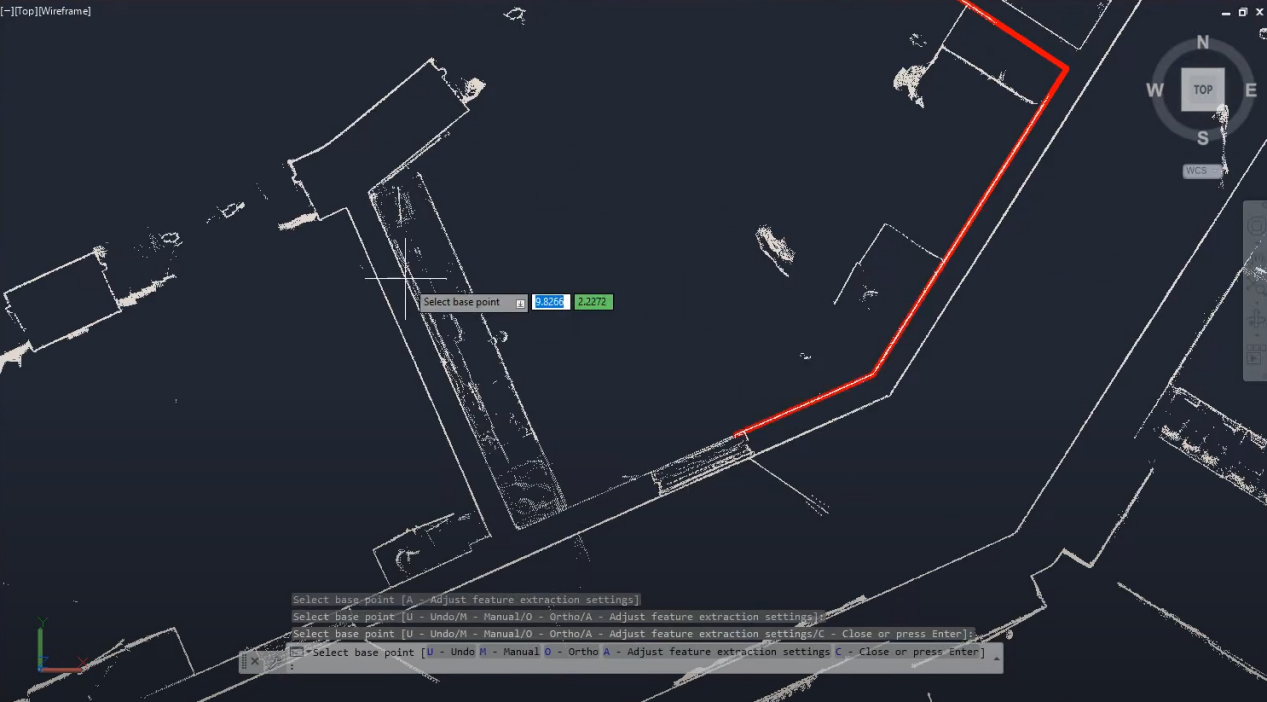 |
||||
 |
||||
| Advanced Options | In cases where there are insufficient points for automatic recognition, the tool offers advanced options to prevent workflow interruptions. | |||
 |
||||
| Ortho Mode | Enabling Ortho Mode in the advanced settings permits you to add line segments perpendicular to the previous line, ensuring precision in your drawings. | |||
 |
||||
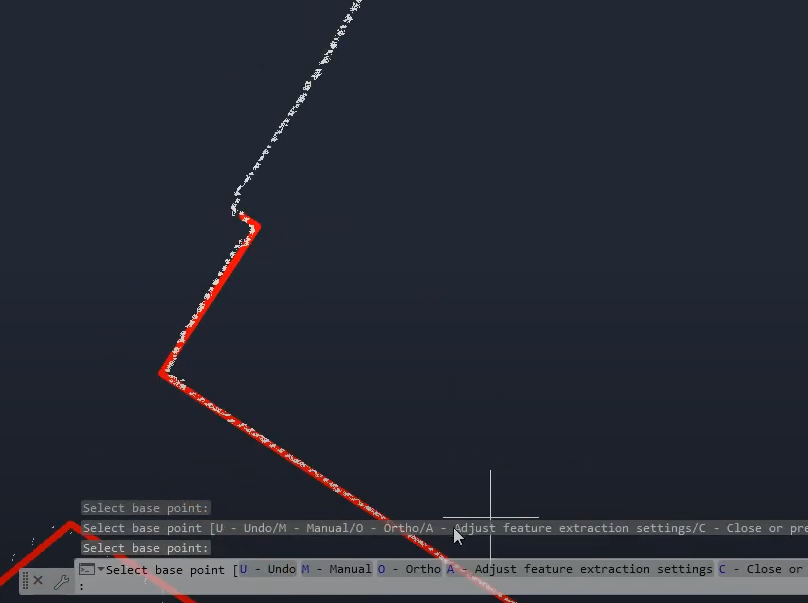 |
||||
| Manual Mode | In Manual Mode, you can add the following line segment with just two clicks in any direction, accommodating various scenarios and drawing needs. | |||
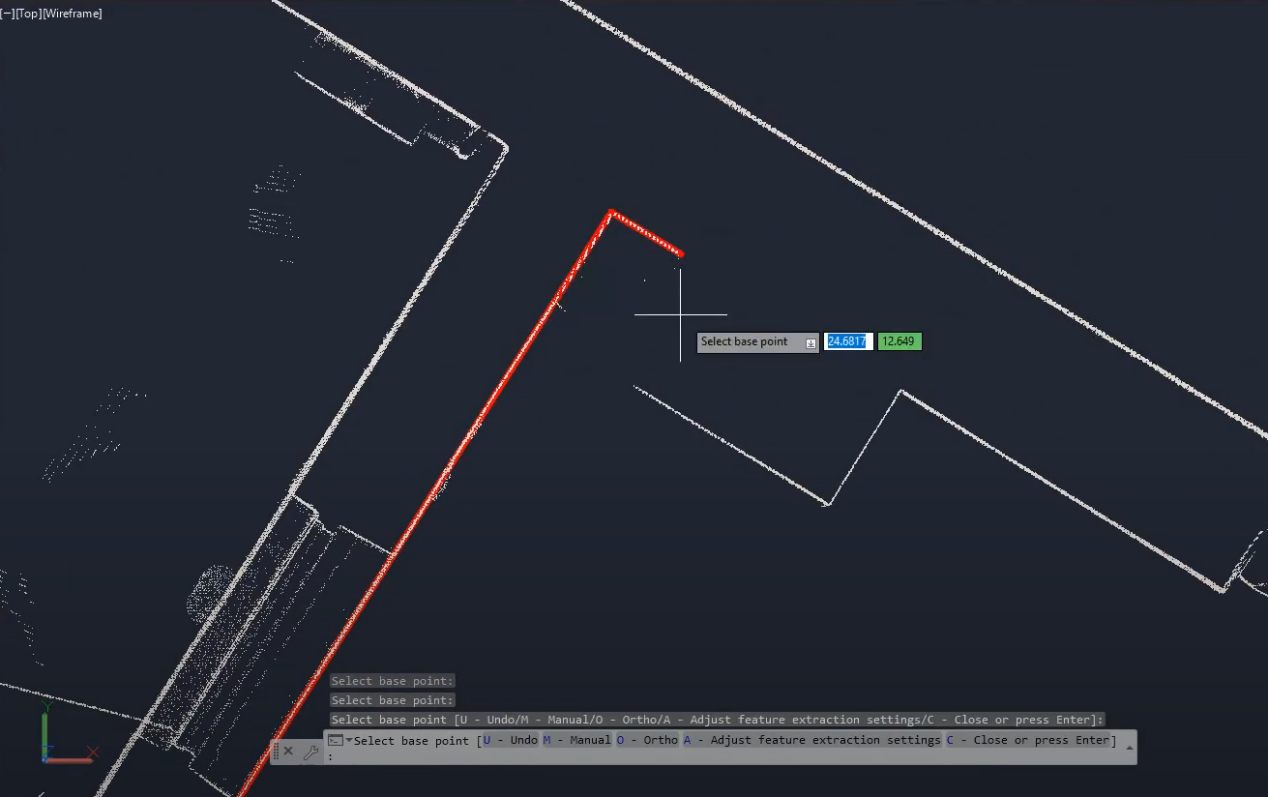 |
||||
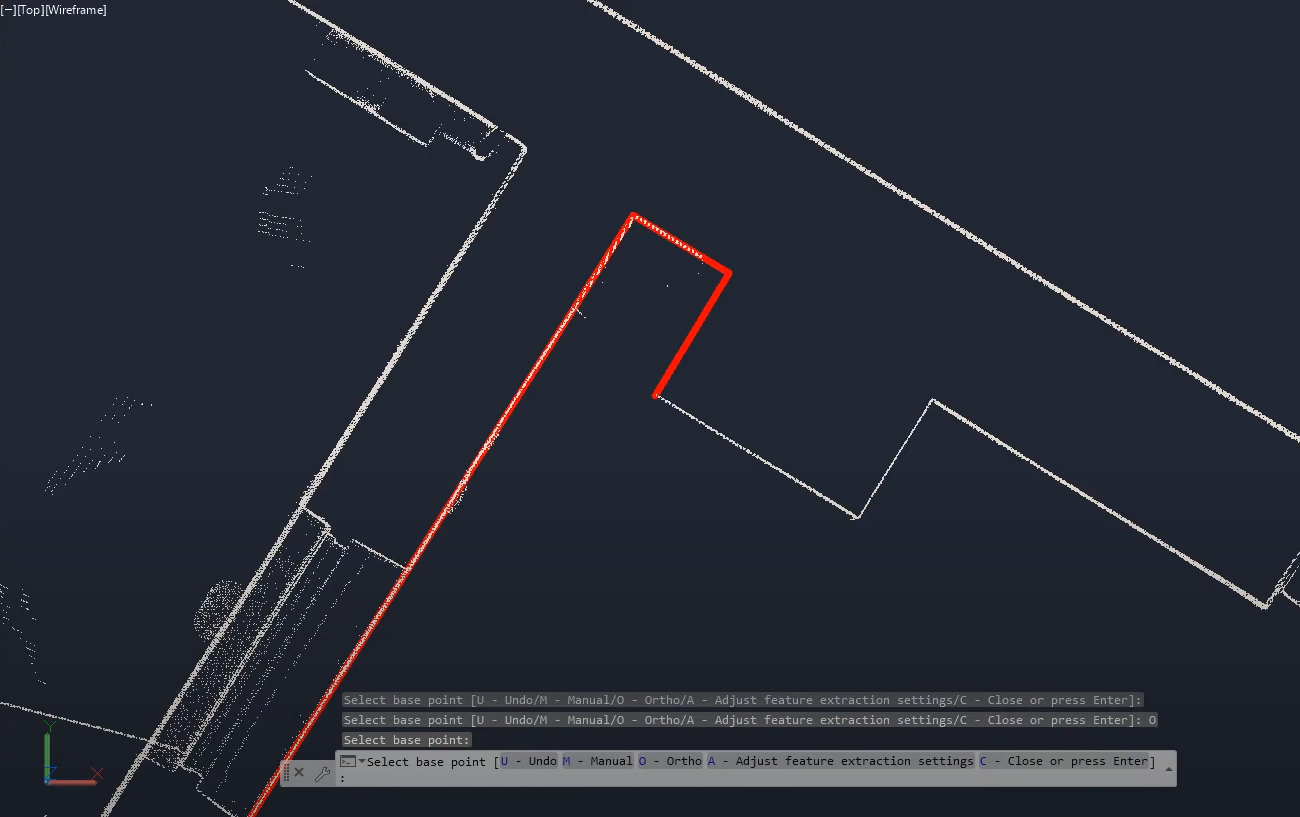 |
||||
 |
Auto Stairs Function | |
| The Auto Stairs command simplifies and accelerates stair drawing from point clouds using a section-based workflow. Follow the steps below to use the function effectively: | ||
Step 1: Launch Auto Stairs Tool
|
||
|
|
||
Step 2: Snap and Select Tread Points
|
||
|
|
||
Step 3: Stair Lines are Drawn Automatically
|
||
|
|
||


 |
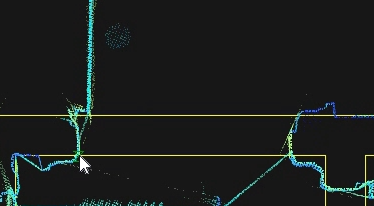
To place the door to the existing opening, use Door (first, you will need to select the line to align the door). |
| To place a Door with an opening: | |
| 1. Specify the first cut point.
|
2. Specify the second cut point
|
| 3. Specify insert point.
|
4. Press escape and click on the inserted door. By using arrows, place your door in the right direction
|
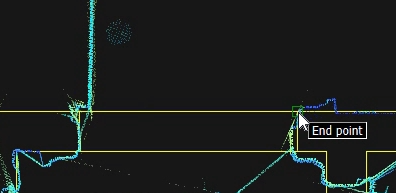
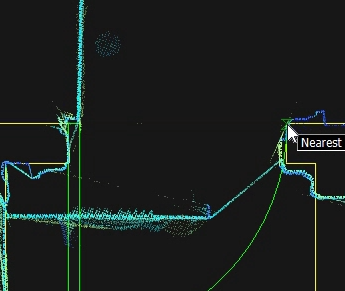
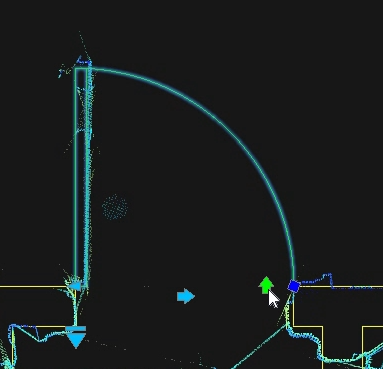
 |
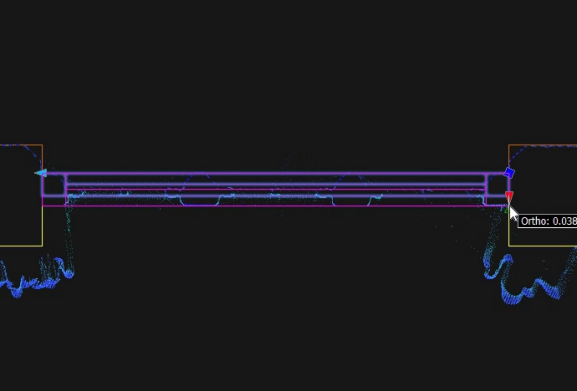
To place the window to the existing opening, select Window (first, you must choose a line to align the window). |
| To place a Window with an opening: | |
| 1. Specify the first cut point.
|
2. Specify the second cut point.
|
| 3. Specify insert point.
|
4. Press escape and click on the inserted window. By using arrows, specify your window size
|
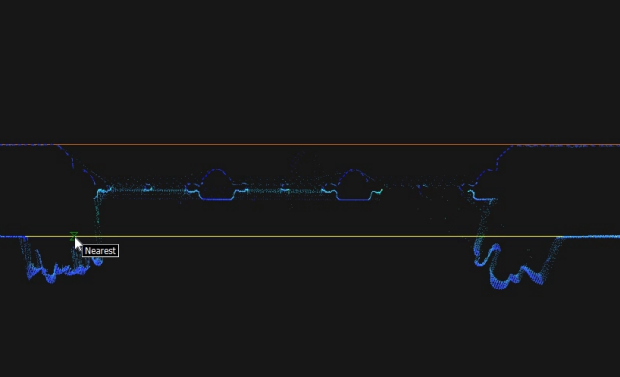


 |
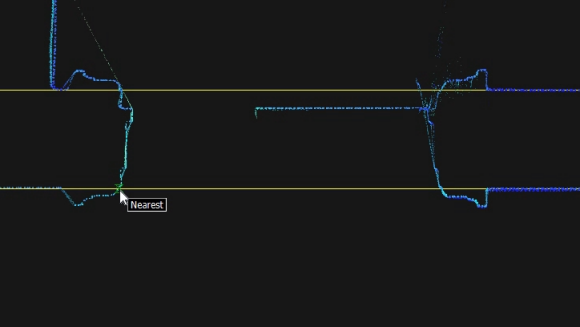
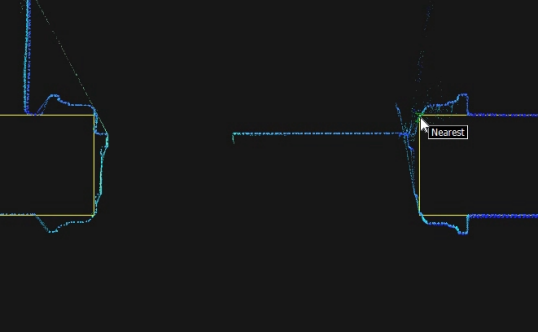
Opening | Adds opening in the wall by specifying two cut points | |
| First point specification
|
Second point specification
|
||
 |
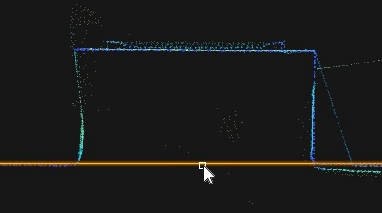
Recess/Pilaster | Creates a recess object | |
| 1. Select Line
|
2. Select the first cut point
|
||
| 3. Select a second cut point
|
4. Select displacement point
|
||


Quick Layers -allows you to quickly select the layers
 |
Drop-down menu, which shows quick layer selection. | ||
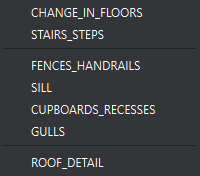 |
Dropdown menu, which prepares layers for drafting selected lines | ||
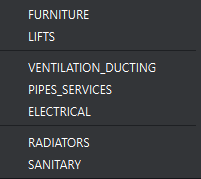 |
The dropdown menu lets you quickly select the required layer for point cloud vectorization. | ||
 |
The dropdown menu allows you to quickly select the layers for faster point cloud slice vectorization. | ||
Annotate – blocks and tools
 |
Floor Annotations drop-down menu: |
| FL | Annotates floor level |
| + | Annotates floor level at the point |
| PL | Annotates plinth level |
| THL | Annotates threshold level |
| WCL | Annotates window sill level |
| RL | Annotates roof level |
| PTL | Annotates parapet level |
| TWL | Annotates wall level |
| Floor direction arrows | |
 |
Add stairs up the direction arrow. |
 |
Add a sloping wall direction arrow. |
 |
Add floor slope direction arrow. |
 |
Floor Plan Room Height Annotation |
Step 1: Prepare the Section View
|
|
 |
|
Step 2: Annotate Room Heights
|
|
|
|
|
Step 3: Repeat for All Rooms
|
|
|
|
|


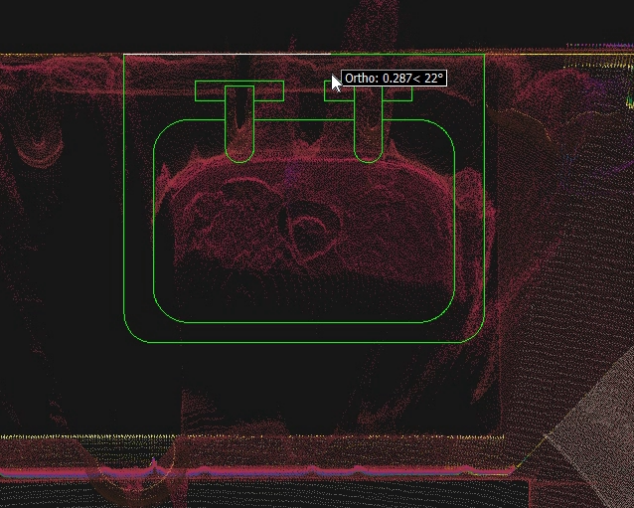
| Insert Blocks | |
 |
Radiator |
 |
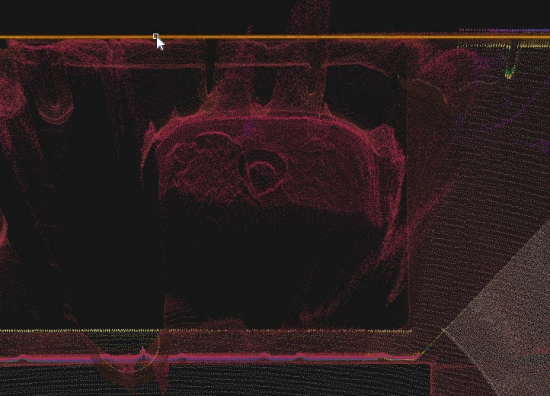
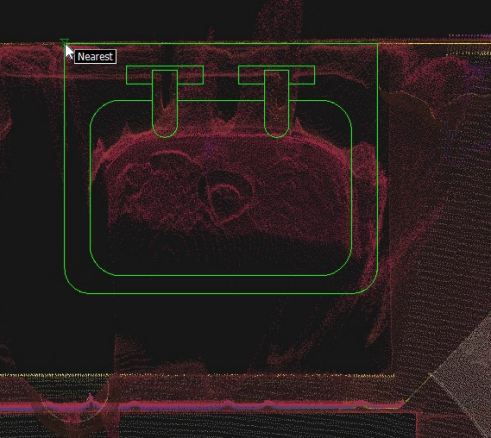
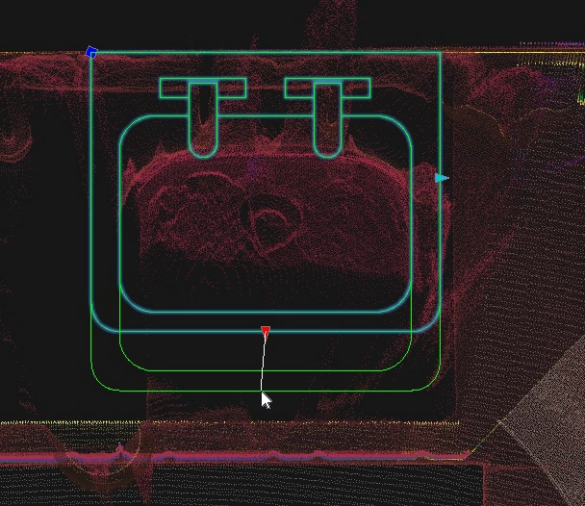
Sink |
 |
WC, WC with a tank, Urinal, Bidet |
 |
Shower, Bathtub |
| To insert blocks: | |
| 1. Select Origin Line.
|
2. Specify destination point.
|
| 3. Specify object position angle.
|
4. Click on the placed block and stretch it using arrows.
|
| Ceiling Annotations drop-down menu: | |||
| CL | 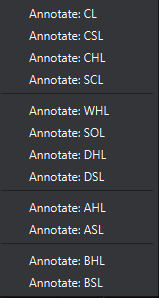 |
Ceiling level | |
| CSL | Arch ceiling springer level | ||
| CHL | Ceiling head level | ||
| SCL | Structural ceiling level | ||
| WHL | Window head level | ||
| SOL | Soffit level | ||
| DHL | Door head level | ||
| DSL | Arch door springer level | ||
| AHL | Arch head level | ||
| ASL | Arch springer level | ||
| BHL | Beam head level | ||
| BSL | Beam soffit level | ||
 |
Beam slope direction arrow | ||
 |
Ceiling slope direction arrow | ||
 |
Arch symbol | ||
View Control TAB

The CCS and View Control TAB in ARES Commander provide tools to control the Coordinate Control System (CCS) and effectively manage your model space views. Below is a list of the tools available in this TAB, along with their descriptions:
 |
ViewTiles | Set multiple view ports. |
 |
Shadeview | Sets display style (2D, 3D wireframe….). |
 |
View by line | Rotates view by drawing the line. |
 |
Point Cloud Orbit | Rotates point cloud by snapping orbit to selected point cloud point. |
| Note: To save a UCS (User Coordinate System), use the ‘CSSTYLE’ command CS or the Axis Manager button.
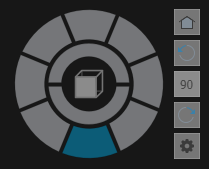
You can also control the view using the View Navigator, typically located in the top-right corner of the screen by default. |
|
 |
 |
Draw TAB

Ares Commander offers a range of primary and commonly used drawing and editing tools. You can find more detailed information and tutorials on how to use them at Graebert Help Center (https://help.graebert.com/en/).
 |
Line Tool | Draws straight line segments between two defined points. |
 |
Poly-line Tool | Creates complex shapes with multiple connected line segments, offering high editability and versatility in CAD design. |
 |
Rectangle Tool | Constructs four-sided polygons with opposite sides equal in length and perpendicular angles, commonly used for representing objects and boundaries in CAD drawings. |
 |
Circle Tool | Creates perfectly round shapes with a defined radius or diameter, often used to represent curves, holes, or circular objects in CAD drawings. |
 |
Arc Tool | Generates curved segments of circles or ellipses, allowing users to create arcs and curved shapes in CAD drawings. |
 |
Ellipse Tool | Constructs elongated or flattened oval shapes representing ellipses, ovals, or elliptical features in CAD drawings. |
 |
Multiple Points Tool | Allows users to place multiple individual points at specified locations within a CAD drawing, which can be helpful for various purposes, such as marking coordinates or creating custom patterns. |
 |
Region Tool | Defines enclosed areas or regions within a CAD drawing, often used for hatching, shading, or highlighting specific sections. |
 |
Perpendicular Tool | A utility that helps users create lines or objects perpendicular to existing lines or objects in the drawing, ensuring precise alignment and angles. |
 |
Hatch Tool | Fills enclosed areas or regions in a CAD drawing with patterns, colours, or textures, enhancing visual representation and distinguishing various elements in the design. |
 |
2D Solid Tool | Allows users to create filled, two-dimensional shapes with defined boundaries, representing solid objects or areas in CAD drawings. |
 |
Parallel | Aligns the second specified entity to the first chosen entity. |
 |
Polyline aligned | Creates a 2D polyline aligned to the selected object. (Undet tool) |
Modify TAB

The Modify Tab in ARES Commander provides various tools to manipulate and modify objects within your drawings. Below is a list of these tools and brief descriptions of their functions. For detailed information and tutorials on using these tools, visit the Graebert Help Center (https://help.graebert.com/en/).
 |
Copy | Duplicates selected objects and places them in the drawing, allowing for easy replication of elements. |
 |
Power Trim | Trims and extends lines and curves interactively by dragging the cursor across the portions to be modified. |
 |
Fillet | Rounds off the corners of selected objects, creating smooth transitions between lines or curves. |
 |
Pattern | Replicates objects in a specified pattern, offering control over the arrangement and distribution of copies. |
 |
Offset | Creates parallel copies of selected objects at a specified distance, which helps generate concentric shapes. |
 |
Weld | Joins multiple selected lines, arcs, or polylines into a single entity, simplifying complex shapes. |
 |
Delete | Removes selected objects from the drawing, allowing for efficient cleanup and removal of unwanted elements. |
 |
Explore | Breaks down complex objects, such as blocks or polylines, into their components for further editing. |
 |
Edit Polyline | Enables editing of 2D polylines, allowing for adding, deleting, or modifying vertices and segments. |
These Modify Tab tools provide essential functionality for editing and refining your drawings in ARES Commander.
Layers TAB

The Layer Visibility and Management Tools in ARES Commander offer comprehensive control over the layers within your drawing. These tools help you manage, display, and organize layers efficiently.
| Icon | Tool Name | Description |
 |
Show All Layers | Activates the tool to display all layers in the drawing, making objects on all layers visible. |
 |
Hide Layers | Activates the tool to hide selected layers in the drawing, making objects on those layers invisible. |
 |
Layers Manager | Opens the Layers Manager, providing a central hub for managing layer properties, settings, and organization. |
 |
Freeze Layers | Activates the tool to freeze selected layers, preventing objects on those layers from being displayed or edited. |
 |
Thaw All Layers | Activates the tool to thaw all frozen layers in the drawing, allowing objects on those layers to be visible again. |
 |
Layer Preview | Opens the Layer Preview window, enabling you to preview the content of individual layers before making them visible. |
 |
Lock Layer | Activates the tool to lock selected layers, preventing any object changes on those layers. |
 |
Unlock Layer | Activates the tool to unlock previously locked layers, allowing you to modify objects on those layers. |
 |
Layer States Manager | Opens the Layer States Manager, allowing you to save, load, and manage different layer states for your drawings. |
 |
Isolate Layer | Activates the tool to isolate selected layers, making only the objects on those layers visible and others hidden. |
 |
Unisolate Layer | Activates the tool to unisolate previously isolated layers, restoring the visibility of all layers. |
 |
Activate Layer | Activates the tool to select and activate a specific layer, making it the current working layer for new objects. |
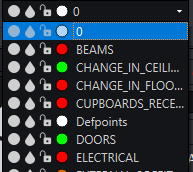 |
Dropdown Layer Manager menu
Provides access to a dropdown menu with additional layer management options, enhancing layer organization. These Layer Tools provide essential functionality for managing and organizing layers in ARES Commander, helping you maintain a structured and efficient drawing environment. For more detailed information and tutorials on using these tools, refer to the Graebert Help Center. |
|

 |
Measure Geometry | Can measure the Angle, Area, Distance or Radius of selected geometry. |
 |
Inquiry | Get Distance, Area, Coordinates, Properties or Region/Mass Properties |
 |
FitMarks | Creates FitMarks and writes down its coordinates |
 |
Change Z to 0 | Changes selected objects’ Z coordinates and elevation of polylines to 0. |
 |
Break Line | Creates a break line by specifying two side points and a middle point for a break |
 |
Number Text | Use this command to insert sequential numbering to selected text entities. |
 |
Annotation Insert Scale | Changes Undet Browser annotations insert scale (default value 2). |
 |
Annotations Block Explode | Explodes block of Undet Browser annotations into solid text. |
 |
Undet Publish | The Undet Publish tool is designed to validate and prepare your drawing for publishing by performing a series of automated checks and cleanup operations. Here’s what it does:
Automated Operations:
|
Help TAB

 |
Getting started guide | ||

In the Getting Started Guide, you will find video tutorials introducing the basics of Undet, tips & tricks to advanced features, FAQs, webinars and more. Also, you will discover Undet Support team contacts and the possibility to learn about other Undet products. |
|||
 |
Frequently Asked Questions (FAQ) | ||
| Got questions about Undet? Check out our FAQ section for answers to common queries. We address issues related to installation, compatibility, and troubleshooting. Contact our support team if you can’t find the answer you’re looking for.
Webinars Explore our extensive archive of past webinars. These recorded webinars cover various topics, from basic tutorials to advanced techniques, and are available to watch at your convenience. By browsing our webinar archive, you can access valuable insights, tips, and demonstrations to help you make the most of Undet in your projects. We encourage you to explore this resource to enhance your skills and stay informed about the capabilities of our software. Undet Support Our dedicated support team can assist you with any challenges while using Undet. Contact us via the provided contact information, and we’ll be happy to help you resolve issues and provide guidance. Explore Other Undet Products Undet offers a range of innovative products beyond the scope of this guide. Visit our website to discover how these additional tools can complement your workflow and meet your specific needs. User Manual: This button will instantly open the Undet for Ares user manual web page. The user manual is a comprehensive resource that provides detailed guidance on how to use Undet for Ares, including step-by-step instructions, tips, and best practices. Whether new to the software or looking for specific information, the user manual is your go-to reference for mastering Undet for Ares. |
|||
 |
About | ||
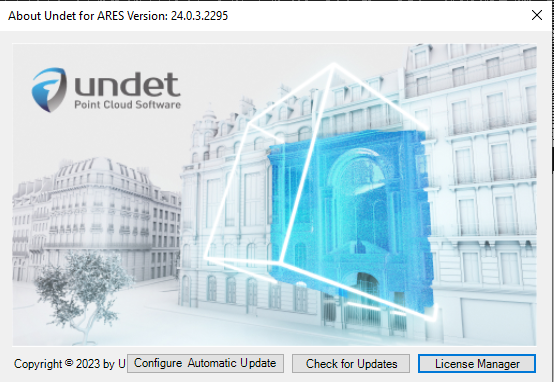
In this section, you will find essential information about your Undet for Ares Commander version. You can check for and configure automatic updates to ensure you always use the latest and most efficient version of Undet for Ares Commander. The “About” section also includes the License Manager, where you can access detailed information about your license and activation. For a comprehensive guide on activating your license, please refer to the ‘License Activation Procedure’.
|
|||
Updated 27-02-2026